Why African Jungle Safaris Are the Ultimate Wildlife Travel Experience
African Jungle Safaris rank among the most rewarding wildlife travel experiences in the world. Across Africa’s forests, savannahs, and protected reserves, travelers experience close encounters with iconic wildlife in natural and undisturbed environments. In addition, these safaris combine adventure, nature, photography, and cultural exploration into one complete travel experience. From tracking gorillas in tropical forests to witnessing predators in the wild, every journey offers something unique and memorable. As global interest in experiential tourism continues to grow, African Jungle Safaris remain a leading choice for travelers seeking authentic wildlife adventures.
Why African Jungle Safaris Are Different From Traditional Safaris
African Jungle Safaris operate in environments that differ significantly from the open savannah safari model. The experience is shaped by dense vegetation, limited visibility, and highly specialized tracking methods. As a result, the structure, intensity, and outcomes of the safari are fundamentally different.
1. Dense Forest Ecosystems vs Open Savannah Landscapes
African Jungle Safaris take place in rainforests, bamboo forests, riverine belts, and mountainous terrain. Unlike open savannah safaris where wildlife is visible across long distances, jungle environments restrict visibility and require guided movement through layered vegetation. This structural difference changes how wildlife is located, observed, and experienced.
2. Structured Tracking Instead of Passive Viewing
Traditional safaris often rely on spotting animals from safari vehicles across open fields. In contrast, African Jungle Safaris depend on active tracking methods. Professional guides interpret footprints, broken vegetation, calls, and feeding patterns to locate wildlife. This creates a more investigative and skill-based approach to wildlife viewing.
3. Higher Frequency of Close-Range Wildlife Encounters
Due to restricted space and dense habitats, wildlife encounters in jungle environments often occur at significantly closer ranges. Species such as primates, forest buffalo, and forest elephants move through tight ecological corridors, increasing the probability of direct but controlled sightings under expert supervision.
4. Greater Biodiversity Concentration Within Smaller Areas
Forest ecosystems support layered biodiversity, from canopy-dwelling primates to ground-level mammals and rare bird species. Unlike expansive savannahs where species may be widely dispersed, jungle environments concentrate biodiversity within smaller geographic zones, allowing multiple encounters within a single trek.
5. Physically Engaging and Terrain-Driven Exploration
African Jungle Safaris require walking safaris, forest hikes, and navigation through uneven, often humid terrain. This physical engagement increases immersion and demands higher participation from the traveler. The experience is less passive and more movement-driven compared to vehicle-based safari models.
6. Specialized Guide Dependency and Safety Protocols
Jungle safaris rely heavily on highly trained guides and trackers due to environmental complexity. Navigation, wildlife safety, and encounter management are strictly controlled. Unlike traditional safaris where self-guided visibility is common, jungle safaris operate under structured, safety-led exploration systems to ensure both visitor security and wildlife protection.
Top African Destinations for Jungle Safari Experiences
African Jungle Safaris in East Africa are defined by dense forests, primate-rich ecosystems, and high-conservation wilderness areas. Uganda, Kenya, and Tanzania host some of the most important jungle safari destinations globally, each offering distinct ecological value, wildlife density, and immersive trekking experiences.
1. Bwindi Impenetrable Forest, Uganda
Bwindi ranks as the most iconic gorilla trekking destination in Africa. It holds nearly half of the world’s remaining mountain gorillas, distributed across thick, mountainous rainforest terrain. The forest structure requires guided trekking through steep slopes and dense vegetation, creating controlled but highly intimate wildlife encounters. Its global conservation status and consistent gorilla sightings make it a leading jungle safari destination.
2. Kibale Forest National Park, Uganda
Kibale is recognized as East Africa’s primate capital due to its exceptional chimpanzee population density. The park supports over a dozen primate species, including chimpanzees, colobus monkeys, and mangabeys. Its structured tracking system allows visitors to follow chimpanzee groups based on vocal calls and movement patterns, offering one of the most reliable primate viewing experiences in Africa.
3. Mgahinga Gorilla National Park, Uganda
Mgahinga provides a less crowded alternative for gorilla trekking within the Virunga volcanic ecosystem. The park’s bamboo forests and volcanic slopes support mountain gorillas in a compact, cross-border habitat shared with Rwanda and the Democratic Republic of Congo. Its limited visitor traffic enhances exclusivity and reduces trekking congestion.
4. Aberdare National Park, Kenya
Aberdare delivers a distinct Kenyan jungle safari experience characterized by high-altitude montane forests and mist-covered valleys. The ecosystem supports elephants, leopards, giant forest hogs, and the rare bongo antelope. Unlike open savannah parks, Aberdare offers dense vegetation, cooler climates, and lodge-based wildlife viewing near forest waterholes.
5. Kakamega Forest Reserve, Kenya
Kakamega is Kenya’s only remaining tropical rainforest, making it a critical biodiversity hotspot. It hosts rare bird species, butterflies, primates, and medicinal plant ecosystems. The forest structure reflects the larger Congo Basin ecosystem, offering a unique West African-style jungle experience within East Africa.
6. Mount Elgon Forest Ecosystem, Kenya/Uganda Border
Mount Elgon’s forested slopes create a transboundary jungle safari environment. The ecosystem supports elephants, duikers, and rare antelope species, alongside extensive caves and waterfalls. Its elevation gradient allows travelers to experience multiple ecological zones within a single trekking system.
7. Serengeti Riverine Forests, Tanzania
Although the Serengeti is known for open plains, its riverine forests and wooded corridors create dense jungle-like habitats. These areas attract elephants, hippos, crocodiles, and predators moving between water sources. The contrast between open savannah and forested corridors makes it a dynamic safari ecosystem.
8. Mahale Mountains National Park, Tanzania
Mahale is one of Africa’s most remote jungle safari destinations, located along Lake Tanganyika. It is internationally recognized for chimpanzee trekking in untouched rainforest conditions. Limited accessibility ensures low tourist density, which enhances wildlife authenticity and conservation integrity.
9. Gombe Stream National Park, Tanzania
Gombe is globally significant due to long-term chimpanzee research and habituation studies. Its steep forested terrain allows structured chimpanzee tracking with high observation success rates. The park offers one of the most scientifically documented primate ecosystems in the world.
10. Udzungwa Mountains National Park, Tanzania
Udzungwa is a biodiversity-rich rainforest known for endemic primates and rare plant species. Unlike traditional safari parks, it focuses heavily on hiking-based exploration. Its waterfalls, montane forests, and isolated ecosystems create a highly immersive jungle trekking experience with strong conservation value.
Wildlife Encounters You Can Expect During an African Jungle Safari
African Jungle Safaris deliver wildlife encounters that are shaped by dense forests, layered ecosystems, and guided tracking systems. Unlike open savannah safaris, sightings are often discovered through movement interpretation, sound cues, and expert-led navigation, creating a more structured and immersive wildlife experience.
1. Mountain Gorillas in Structured Family Groups
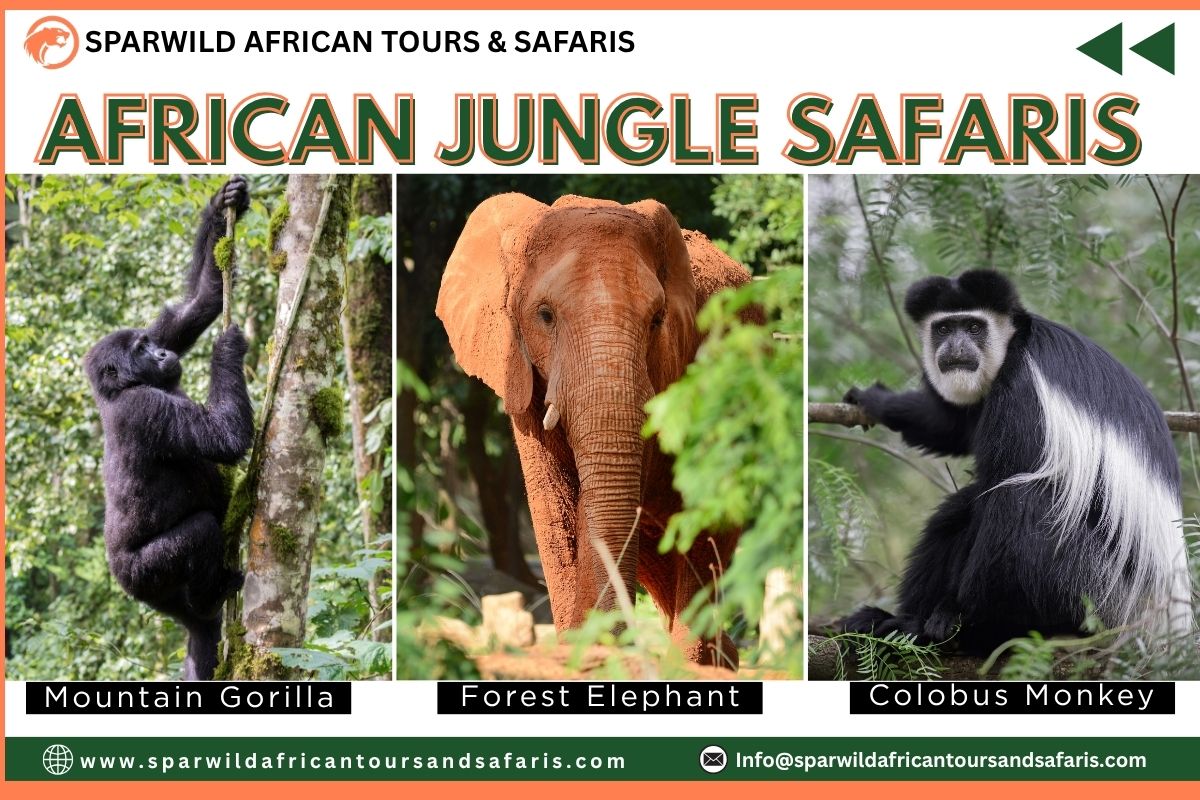
In destinations such as Bwindi Impenetrable Forest and Mgahinga Gorilla National Park, mountain gorillas are encountered within well-established family units. Tracking involves moving through steep, dense forest terrain guided by rangers who follow feeding signs, nesting locations, and previous movement paths. Once located, visitors observe natural behaviors such as feeding, resting, grooming, and group protection patterns, all under strict conservation protocols designed to minimize disturbance.
2. Chimpanzees in Dynamic Forest Movement
In Kibale Forest, Gombe Stream, and Mahale Mountains, chimpanzees are highly active and mobile within forest ecosystems. Encounters depend on tracking vocalizations, branch movement, and feeding activity in fruit-rich zones. Their behavior is expressive and social, often involving grooming, tool use, territorial calls, and coordinated group movement across both ground and canopy levels.
3. Forest Elephants in Dense Vegetation Corridors
Forest elephants, found in areas such as Aberdare ecosystems and parts of Uganda’s forest reserves, move in smaller, more concealed groups compared to savannah elephants. Their presence is often detected through broken vegetation, footprints, and feeding trails rather than direct visibility. Encounters are rare but highly rewarding due to their elusive nature and deep forest movement patterns.
4. Rare Primates and Endemic Forest Species
African Jungle Safaris also highlight species that are less visible in traditional safari environments, including colobus monkeys, L’Hoest’s monkeys, and other forest-dependent primates. These species inhabit different forest layers, requiring careful observation across canopy, mid-story, and ground zones. Their behavior is closely linked to forest density, fruit availability, and territorial structures.
5. Rich Birdlife Across Forest Layers
Jungle ecosystems support a dense and diverse bird population distributed across multiple forest levels. Species such as hornbills, turacos, and forest robins are commonly encountered, often identified first through calls before visual confirmation. Bird activity varies by season and fruiting cycles, creating constantly shifting observation patterns throughout the forest.
6. Indirect Wildlife Evidence and Tracking Signs
A key component of African Jungle Safaris is interpreting indirect wildlife evidence such as fresh tracks, feeding remains, broken branches, and nesting sites. These indicators allow guides to reconstruct animal movement patterns and predict location zones. This tracking dimension adds depth to the safari experience, transforming it into an active process of discovery rather than passive viewing.
Best Time to Go on an African Jungle Safari
The best time for African Jungle Safaris varies depending on the destination, but across Africa, forest-based safari experiences are generally influenced by rainfall patterns, animal movement cycles, and vegetation density. Unlike savannah safaris that are often tied to predictable migration seasons, jungle safaris require a more strategic approach based on forest accessibility and wildlife tracking conditions.
1. Dry Seasons for Easier Forest Access
The dry seasons are typically the most favorable periods for African Jungle Safaris. Reduced rainfall leads to more stable trekking paths, less mud in forest trails, and improved visibility through vegetation. In Uganda, Rwanda, Kenya, and Tanzania, dry periods generally allow easier movement for both travelers and wildlife trackers, increasing the success rate of primate sightings.
2. Wet Seasons for Lush Forest Biodiversity
The wet seasons transform forest ecosystems into dense, highly productive habitats. Vegetation becomes thicker, and wildlife disperses across wider areas due to abundant food sources. While trekking conditions may be more challenging, this period supports vibrant birdlife, active primate feeding behavior, and dramatic rainforest scenery, making it ideal for photography and biodiversity-focused travelers.
3. Year-Round Gorilla Trekking Opportunities
In destinations such as Bwindi Impenetrable Forest and Volcanoes National Park, gorilla trekking is available throughout the year. Gorilla groups remain habituated and tracked by conservation teams regardless of season. However, terrain conditions differ, with dry months offering more comfortable hiking conditions and wet months requiring more physical endurance.
4. Peak Wildlife Activity Periods in East African Forests
Forests such as Kibale, Kakamega, and Mahale Mountains maintain consistent wildlife activity throughout the year. However, certain months align with higher fruiting cycles in trees, which increases primate visibility and feeding activity. These natural cycles directly influence chimpanzee movement patterns and observation success rates.
5. Shoulder Seasons for Balanced Safari Conditions
The transitional periods between wet and dry seasons offer a balanced safari experience. During these months, forests remain lush but still accessible, and wildlife is actively moving between feeding zones. These periods often provide fewer tourists, better pricing options, and stable trekking conditions across multiple destinations.
6. Seasonal Strategy Based on Safari Goals
The optimal timing ultimately depends on the traveler’s objective. Dry seasons are preferred for easier trekking and higher visibility, while wet seasons favor immersive rainforest photography and biodiversity exploration. For primate-focused safaris, both seasons remain viable due to consistent habitat stability and ongoing conservation tracking systems.
Essential Activities That Make Jungle Safaris Unforgettable
African Jungle Safaris are built around immersive, forest-based experiences that require guided exploration, physical engagement, and close interaction with natural ecosystems. These activities are designed to move beyond observation and into participation within the jungle environment.
1. Gorilla Trekking in Mountain Rainforests
Gorilla trekking is one of the most significant activities in African Jungle Safaris, particularly in Uganda’s Bwindi Impenetrable Forest and Rwanda’s Volcanoes National Park. The experience involves hiking through dense, steep forest terrain guided by expert trackers until a habituated gorilla family is located. Once found, visitors observe structured social behavior such as feeding, grooming, resting, and group interaction under strict conservation protocols that regulate time and proximity.
2. Chimpanzee Tracking in Forest Ecosystems
Chimpanzee tracking in Kibale Forest (Uganda), Gombe Stream, and Mahale Mountains (Tanzania) delivers a highly dynamic wildlife experience. Guides rely on vocal calls, nest locations, and feeding patterns to locate troops. Encounters often reveal complex social behavior including communication, grooming, tool use, and coordinated group movement across both ground level and canopy layers.
3. Guided Forest Walks and Biodiversity Exploration
Forest walks provide structured access to smaller ecological details within jungle environments. These walks focus on medicinal plants, insects, amphibians, and lesser-known mammal species. Unlike vehicle safaris, this activity allows direct immersion into forest structure and helps travelers understand how biodiversity functions across different forest layers.
4. Birdwatching in Multi-Layered Rainforests
African Jungle Safaris support extensive birdwatching opportunities across canopy, mid-story, and forest floor zones. Species such as hornbills, turacos, sunbirds, and forest robins are commonly observed. Identification often begins with bird calls, making auditory awareness a key part of the experience. Seasonal changes influence bird migration, feeding activity, and visibility.
5. Canopy Walk Experiences in Selected Forests
In destinations such as Nyungwe Forest National Park in Rwanda and Kakamega Forest in Kenya, canopy walkways provide elevated viewing platforms above the rainforest. These structures allow observation of wildlife movement across treetops, offering a different ecological perspective that highlights vertical biodiversity distribution within jungle ecosystems.
6. Cultural Visits to Forest-Adjacent Communities
Many African Jungle Safari destinations are surrounded by communities with long-standing cultural and ecological relationships with forests. Cultural visits provide insights into traditional forest use, conservation practices, and local livelihoods. These experiences add socio-cultural depth to the safari and support community-based tourism models that contribute to conservation efforts.
What to Pack for an African Jungle Safari Adventure
Packing for African Jungle Safaris requires a strategic approach due to changing weather conditions, dense forest terrain, and physically demanding trekking activities. Unlike savannah safaris, jungle environments demand practical, lightweight, and protective gear that supports mobility, comfort, and safety.
1. Lightweight, Neutral-Colored Clothing
Neutral tones such as green, brown, khaki, and beige are recommended to blend with forest environments and reduce wildlife disturbance. Lightweight, breathable fabrics help manage humidity and heat, while long-sleeved shirts and trousers provide protection against insects, thorns, and dense vegetation during trekking.
2. Waterproof Jacket and Rain Protection Gear
Rain is common in jungle ecosystems, even during dry seasons. A compact waterproof jacket, rain poncho, and quick-dry clothing are essential to maintain comfort during sudden weather changes. These items also help protect against damp conditions in high-altitude forests such as Bwindi and Nyungwe.
3. Strong Hiking Boots with Grip Support
Jungle safaris involve uneven terrain, slippery trails, and steep inclines. Durable hiking boots with ankle support and strong grip are critical for stability and injury prevention. Waterproof or water-resistant options are ideal for wet forest conditions.
4. Daypack with Essential Field Supplies
A small, comfortable backpack is necessary for carrying essentials such as drinking water, snacks, insect repellent, a camera, and personal items. A well-organized daypack ensures mobility during long trekking hours without unnecessary weight or discomfort.
5. Insect Repellent and Basic Medical Essentials
Forest environments contain insects such as mosquitoes and biting flies. High-quality insect repellent helps reduce discomfort and risk of bites. Basic medical items such as pain relievers, antihistamines, and personal medication should also be included for safety and preparedness.
6. Binoculars and Camera Equipment
Wildlife sightings in jungle environments often occur at varying distances and within dense vegetation. Binoculars enhance visibility of distant or partially hidden animals, while a camera with good low-light capability is ideal for capturing forest wildlife conditions. Extra batteries and waterproof protection are also recommended.
7. Trekking Gloves and Walking Stick (Optional but Useful)
Trekking gloves help protect hands when navigating through thick vegetation or rocky terrain. In some destinations, a walking stick is provided or recommended to support balance during steep or slippery forest hikes.
8. Personal Identification and Safari Permits
Important travel documents, including passports, gorilla or chimpanzee trekking permits, and identification, must be securely stored and easily accessible. These permits are strictly checked before entering protected forest areas.
9. Hydration Supplies and Energy Snacks
Long forest treks require sustained energy and hydration. Reusable water bottles and high-energy snacks such as nuts or energy bars help maintain stamina during physically demanding jungle excursions.
10. Compact Day Essentials for Weather and Safety Changes
Additional items such as sunscreen, a hat, sunglasses, and a small flashlight or headlamp are useful for varying weather conditions and early morning or late afternoon trekking sessions. These essentials support comfort, visibility, and overall preparedness in remote forest environments.
How to Choose the Right African Jungle Safari Package
Selecting the right African Jungle Safari package requires careful evaluation of destination type, wildlife focus, logistics, and operator credibility. Unlike standard tours, jungle safaris involve specialized trekking conditions, regulated permits, and ecosystem-specific experiences that directly influence value, safety, and overall outcome.
1. Define Your Safari Focus and Wildlife Priority
The first step is identifying what you want to experience, as African Jungle Safaris vary significantly by wildlife type and ecosystem.
- Gorilla trekking focus
- Best suited for Bwindi (Uganda), Volcanoes National Park (Rwanda), and Mgahinga
- Requires gorilla trekking permits booked in advance due to limited daily slots
- Ideal for travelers seeking close-range primate encounters in mountainous forests
- Chimpanzee tracking focus
- Found in Kibale (Uganda), Gombe Stream, and Mahale Mountains (Tanzania)
- More dynamic and movement-based compared to gorilla trekking
- Suitable for travelers interested in behavioral wildlife observation
- Biodiversity and forest exploration focus
- Includes Kakamega Forest (Kenya) and Nyungwe Forest (Rwanda)
- Emphasis on birdlife, plant species, butterflies, and ecological diversity
- Best for photography and nature research experiences
2. Evaluate Destination Accessibility and Travel Logistics
Accessibility directly affects comfort, cost, and overall safari experience.
- Remote destinations
- Mahale Mountains and Dzanga-Sangha require multiple transport modes (air + boat + road)
- Offer high exclusivity but demand longer travel time and higher budgets
- Moderate accessibility regions
- Bwindi, Kibale, and Volcanoes National Park are accessible via road transfers from major cities
- Balanced option for most travelers seeking efficiency and experience
- Urban-connected forest reserves
- Kakamega Forest and Aberdare ranges are easier to access from major Kenyan cities
- Suitable for shorter safari itineraries
3. Check Permit Requirements and Booking Availability
Permits are a critical component of jungle safari planning and directly impact availability.
- Gorilla trekking permits are limited per day per group
- Chimpanzee tracking permits also require advance booking in peak seasons
- Prices vary by country and conservation authority regulations
- Early booking (3–6 months in advance) is often required for high-demand seasons
4. Assess Accommodation Standards and Location Strategy
Accommodation determines comfort levels and travel efficiency during jungle safaris.
- Luxury eco-lodges
- Located near park boundaries for quick access to trekking points
- Offer comfort, guided services, and high-end amenities
- Mid-range safari lodges
- Balanced pricing with essential comfort and proximity to forest zones
- Common in Uganda and Kenya forest reserves
- Budget camps and guesthouses
- Located slightly further from park entrances
- Suitable for travelers prioritizing cost efficiency over convenience
5. Review Tour Operator Expertise and Safety Standards
The quality of the operator significantly influences safety, experience, and logistical efficiency.
- Look for operators with verified experience in jungle trekking environments
- Ensure presence of certified guides trained in forest navigation and wildlife behavior
- Confirm inclusion of safety protocols, emergency procedures, and communication systems
- Check reviews, conservation affiliations, and regional specialization
6. Align Budget with Experience Expectations
African Jungle Safari packages vary widely depending on destination, exclusivity, and services included.
- High-budget packages typically include luxury lodges, private guides, and charter transfers
- Mid-range packages balance guided trekking with standard accommodation
- Budget packages may require shared groups and simpler logistics
- Hidden costs to consider:
- Permits (gorilla/chimpanzee tracking)
- Park entry fees
- Transport between forest regions
- Tips for guides and trackers
7. Consider Seasonality and Travel Timing
Seasonal conditions directly affect trekking difficulty and wildlife visibility.
- Dry seasons improve trail accessibility and visibility
- Wet seasons enhance biodiversity but increase trekking difficulty
- Shoulder seasons provide balanced conditions with fewer tourists
- Gorilla and chimpanzee trekking remains available year-round
8. Verify Inclusions and Itinerary Structure
A well-structured safari package should clearly define what is included.
- Confirm number of trekking permits included
- Check whether transport, meals, and park fees are covered
- Review daily itinerary balance between trekking and rest periods
- Ensure clarity on group size and guide allocation
9. Prioritize Conservation and Ethical Tourism Practices
Responsible safari selection supports both wildlife protection and local communities.
- Choose operators that support conservation programs
- Ensure adherence to park rules and wildlife protection guidelines
- Prefer community-based tourism initiatives
- Avoid packages that promote unsafe wildlife interaction practices
10. Match Package Type to Experience Level
Your experience level should guide the complexity of the safari package.
- First-time travelers: structured, guided, and moderate trekking difficulty
- Experienced travelers: remote destinations and multi-park itineraries
- Photographers: longer stays with flexible tracking schedules
- Researchers or enthusiasts: specialized biodiversity-focused packages
Safety, Conservation and Responsible Safari Tourism
African Jungle Safaris operate within highly sensitive ecosystems where safety, wildlife protection, and responsible tourism are interconnected. Unlike conventional travel experiences, jungle safaris take place in protected habitats that depend on strict regulation, controlled human interaction, and conservation-driven practices.
1. Personal Safety in Dense Forest Environments
Safety in jungle ecosystems is structured around guided movement and controlled access zones.
- All treks are conducted with certified rangers and trained guides
- Group movement is regulated to avoid separation in dense vegetation
- Safety briefings are conducted before entering forest zones
- Emergency protocols are in place for weather changes, terrain challenges, or wildlife proximity
- Communication systems are maintained between field teams and park authorities
2. Wildlife Interaction Boundaries and Ethical Distance Rules
Responsible jungle safaris follow strict wildlife interaction guidelines designed to protect both visitors and animals.
- Minimum distance is maintained when observing primates such as gorillas and chimpanzees
- Sudden movement, loud noise, or direct interference is prohibited
- Viewing time is regulated to reduce stress on animal groups
- Feeding or touching wildlife is strictly forbidden under conservation law
- Photography is controlled to avoid flash disruption in sensitive environments
3. Conservation-Driven Safari Operations
African Jungle Safaris are deeply linked to conservation economics, where tourism directly supports ecosystem preservation.
- Permit fees contribute to habitat protection and ranger operations
- Revenue supports anti-poaching initiatives and wildlife monitoring systems
- Scientific research programs rely on controlled tourism access
- Forest conservation projects are funded through park entry systems
- Endangered species protection is strengthened through regulated visitation
4. Role of Local Communities in Responsible Tourism
Community participation is central to sustainable jungle safari models across Africa.
- Local guides and trackers provide ecological knowledge and employment
- Community-based tourism initiatives reduce pressure on protected forests
- Cultural programs help diversify income beyond wildlife tourism
- Education initiatives improve conservation awareness in surrounding areas
- Revenue-sharing models strengthen long-term habitat protection incentives
5. Environmental Impact Control and Visitor Responsibility
Minimizing ecological disturbance is a core requirement in African Jungle Safaris.
- Waste management policies enforce “leave no trace” principles
- Visitor numbers are controlled through permit systems
- Designated trekking paths reduce habitat disruption
- Eco-lodges operate under low-impact infrastructure standards
- Carbon and resource use is increasingly integrated into safari planning
6. Regulatory Framework and Protected Area Governance
Jungle safari destinations are governed by strict national and international conservation frameworks.
- National park authorities regulate access, permits, and visitor conduct
- International conservation bodies support endangered species protection
- Regular wildlife monitoring ensures population stability tracking
- Policy enforcement maintains balance between tourism and preservation
- Cross-border conservation zones (e.g., Virunga ecosystem) enhance regional protection
7. Traveler Responsibility and Ethical Participation
Responsible safari tourism requires active participation from travelers, not just operators.
- Following guide instructions ensures safety and ecological protection
- Respecting wildlife boundaries supports natural behavior preservation
- Supporting certified operators strengthens ethical tourism networks
- Choosing conservation-focused packages reinforces long-term sustainability
- Understanding ecosystem sensitivity improves overall safari impact awareness
8. Long-Term Sustainability of Jungle Safari Ecosystems
Sustainability is central to the future of African Jungle Safaris.
- Controlled tourism prevents habitat degradation
- Conservation funding ensures long-term species survival
- Community integration reduces illegal exploitation risks
- Scientific research improves ecosystem management strategies
- Responsible tourism ensures future generations can access intact forest environments
Frequently Asked Questions (FAQs) About African Jungle Safaris
African Jungle Safaris often raise practical and conceptual questions for first-time travelers. Below is a structured breakdown designed to clarify expectations, planning requirements, and booking decisions.
1. What is an African Jungle Safari?
An African Jungle Safari is a guided wildlife experience conducted in dense forest ecosystems rather than open savannahs. It focuses on tracking primates, observing forest biodiversity, and navigating tropical or montane environments under expert supervision. Unlike traditional game drives, movement is often on foot through structured trekking routes.
2. How is a jungle safari different from a traditional safari?
A jungle safari takes place in thick forests with limited visibility, while traditional safaris occur in open plains. Consequently, jungle safaris rely on tracking, sound interpretation, and guided walking, whereas savannah safaris rely mainly on vehicle-based wildlife viewing.
3. Which countries offer the best African Jungle Safaris?
The leading destinations include Uganda, Rwanda, Kenya, and Tanzania. Uganda and Rwanda are known for gorilla trekking, while Kenya and Tanzania offer forest reserves, chimpanzee habitats, and biodiversity-rich ecosystems within protected areas.
4. What wildlife can I expect to see during a jungle safari?
Wildlife varies by destination, however key sightings include mountain gorillas, chimpanzees, forest elephants, colobus monkeys, rare forest birds, and endemic species. Additionally, indirect signs such as tracks and feeding areas are commonly observed during guided treks.
5. Do I need a permit for jungle safaris like gorilla trekking?
Yes, certain activities such as gorilla and chimpanzee trekking require official permits. These permits regulate visitor numbers, support conservation funding, and ensure controlled interaction with wildlife in protected habitats.
6. What is the best time to go on African Jungle Safaris?
Jungle safaris are available year-round. However, dry seasons are preferred for easier trekking conditions, while wet seasons offer richer vegetation and stronger biodiversity experiences. Ultimately, timing depends on comfort preference and travel goals.
7. How physically demanding is a jungle safari?
Most jungle safaris require moderate to high physical fitness. Activities involve hiking through uneven terrain, dense vegetation, and sometimes steep forest slopes. Therefore, travelers should be prepared for extended walking periods.
8. What should I pack for an African Jungle Safari?
Essential items include lightweight long-sleeved clothing, waterproof jackets, strong hiking boots, insect repellent, binoculars, a small backpack, and hydration supplies. In addition, travel documents and trekking permits must always be carried securely.
9. Are African Jungle Safaris safe for travelers?
Yes, they are generally safe when conducted through licensed operators. Trained guides, structured trekking systems, and park regulations ensure controlled movement within forest environments. Moreover, safety briefings are provided before each trek.
10. Why should I book an African Jungle Safari with Sparwild African Tours and Safaris?
Booking with Sparwild African Tours and Safaris ensures professionally guided experiences, well-structured itineraries, and access to trusted safari networks across Uganda, Kenya, and Tanzania. In addition, the brand focuses on reliable planning, conservation-aware tourism, and tailored safari packages that align with different travel budgets and expectations, ensuring a seamless and well-coordinated jungle safari experience from start to finish.
Book African Jungle Safari with Sparwild African Tours and Safaris
African Jungle Safaris offer rare, close-range wildlife encounters in some of Africa’s most protected and biodiverse forest ecosystems. These journeys are carefully structured through guided trekking, conservation-approved routes, and expert-led wildlife tracking for a truly immersive experience. With Sparwild African Tours and Safaris, every detail is handled professionally, from permits and logistics to guided forest exploration across Uganda, Kenya, and Tanzania. Secure your jungle safari package today and experience Africa’s wilderness with confidence, clarity, and expert support.